RESEARCH & EDITORIAL
Visual Thesis Design
My thesis, “The AI Revolution in UX/UI Design: Transforming Creative Practice, User Experience, and Design Equity in the Digital Age,” investigated how artificial intelligence is reshaping UX/UI design. It examined AI’s creative potential, professional and ethical implications, and the evolving relationship between automation, accessibility, and design authorship.
Overview
Initially, I intended to produce a working UX/UI prototype to demonstrate these ideas, but the research process revealed that many challenges—like cognitive bias, cultural representation, and trust—are best communicated metaphorically rather than functionally. This insight motivated a shift toward a visual bestiary: a symbolic framework translating complex concepts into memorable, character-based entities such as the Bias Beast, Fairness Gardener, and Red Button Human. Each figure personifies a tension between technological ambition and human values, turning abstract ethical debates into visual narratives.
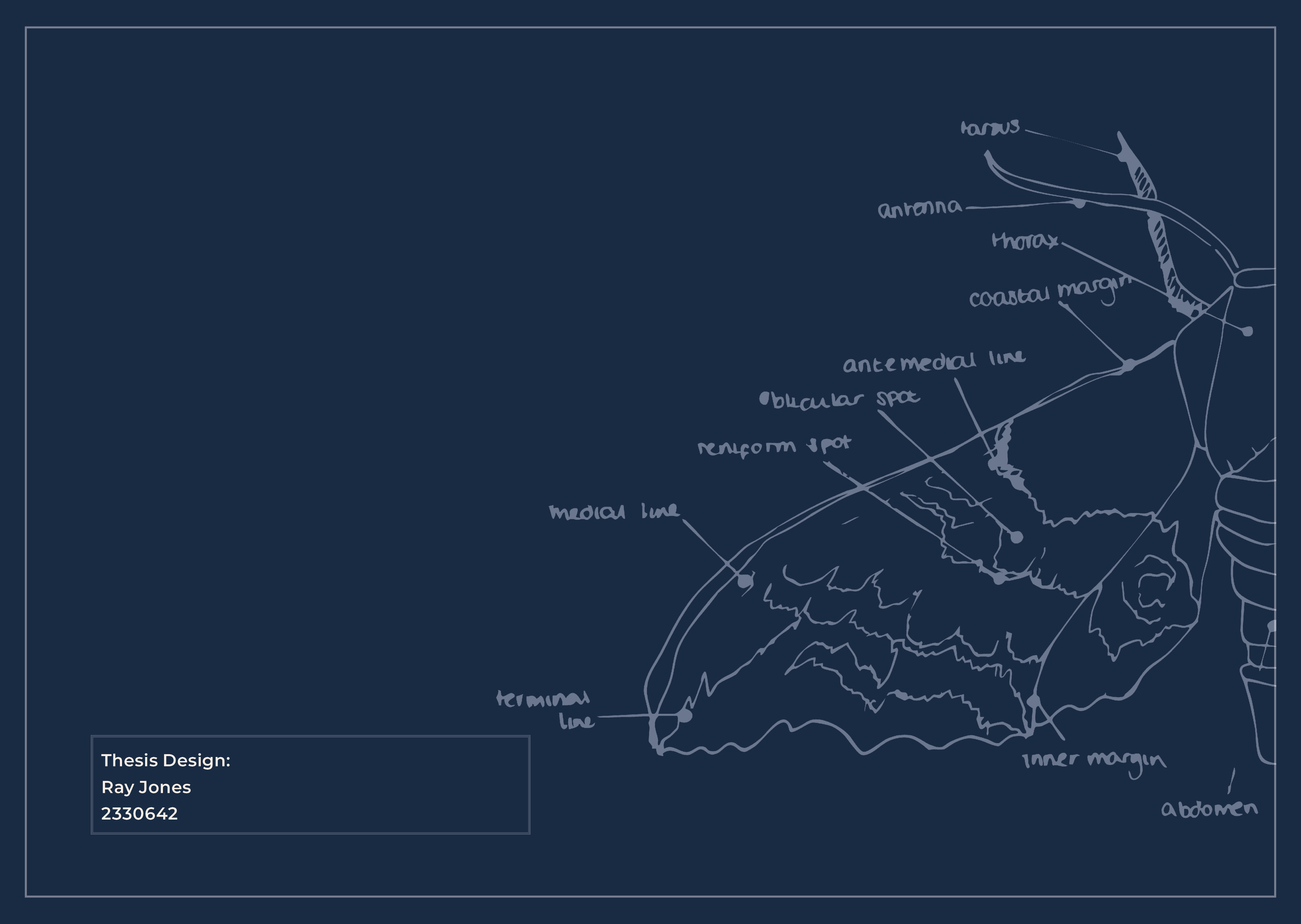
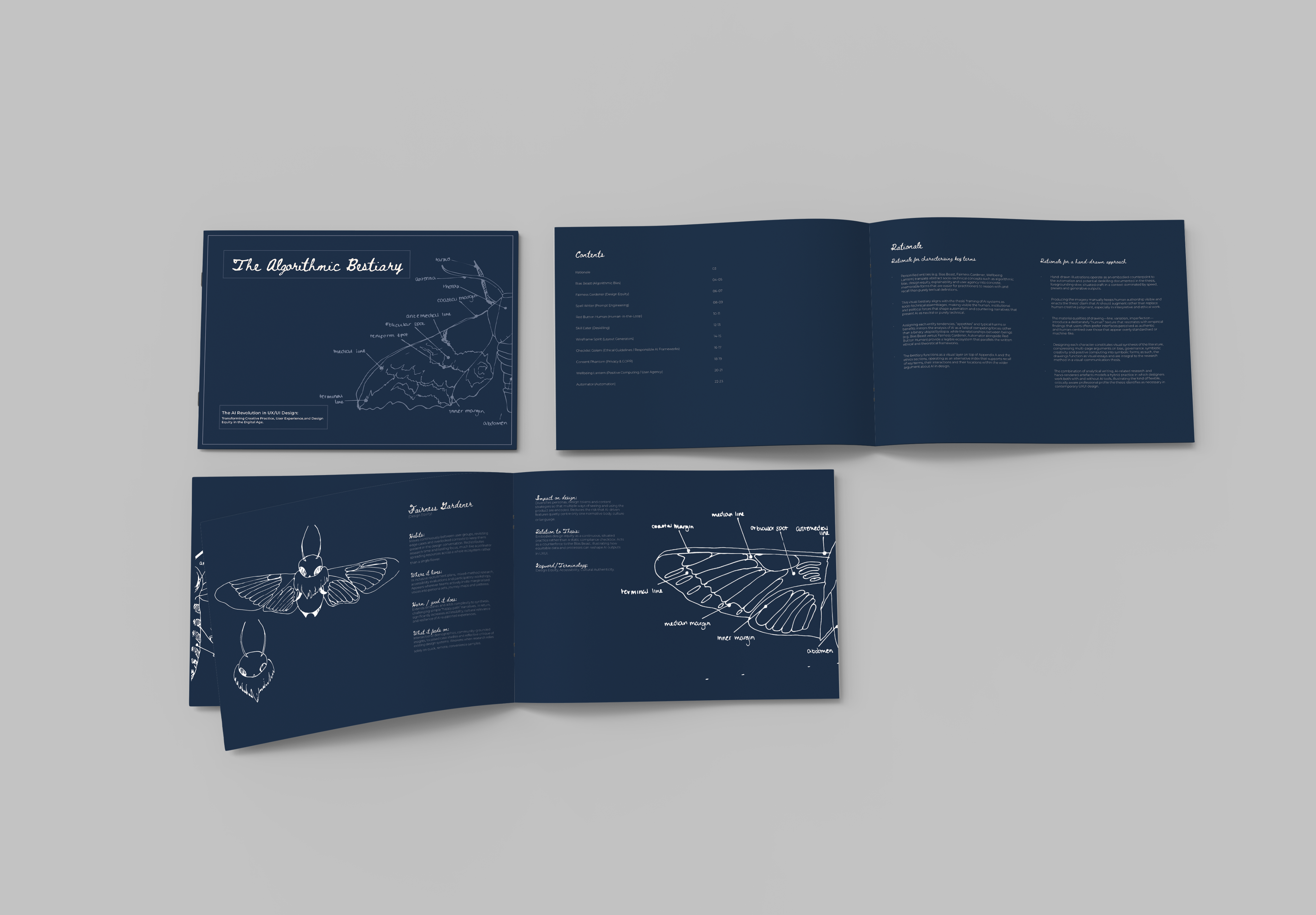
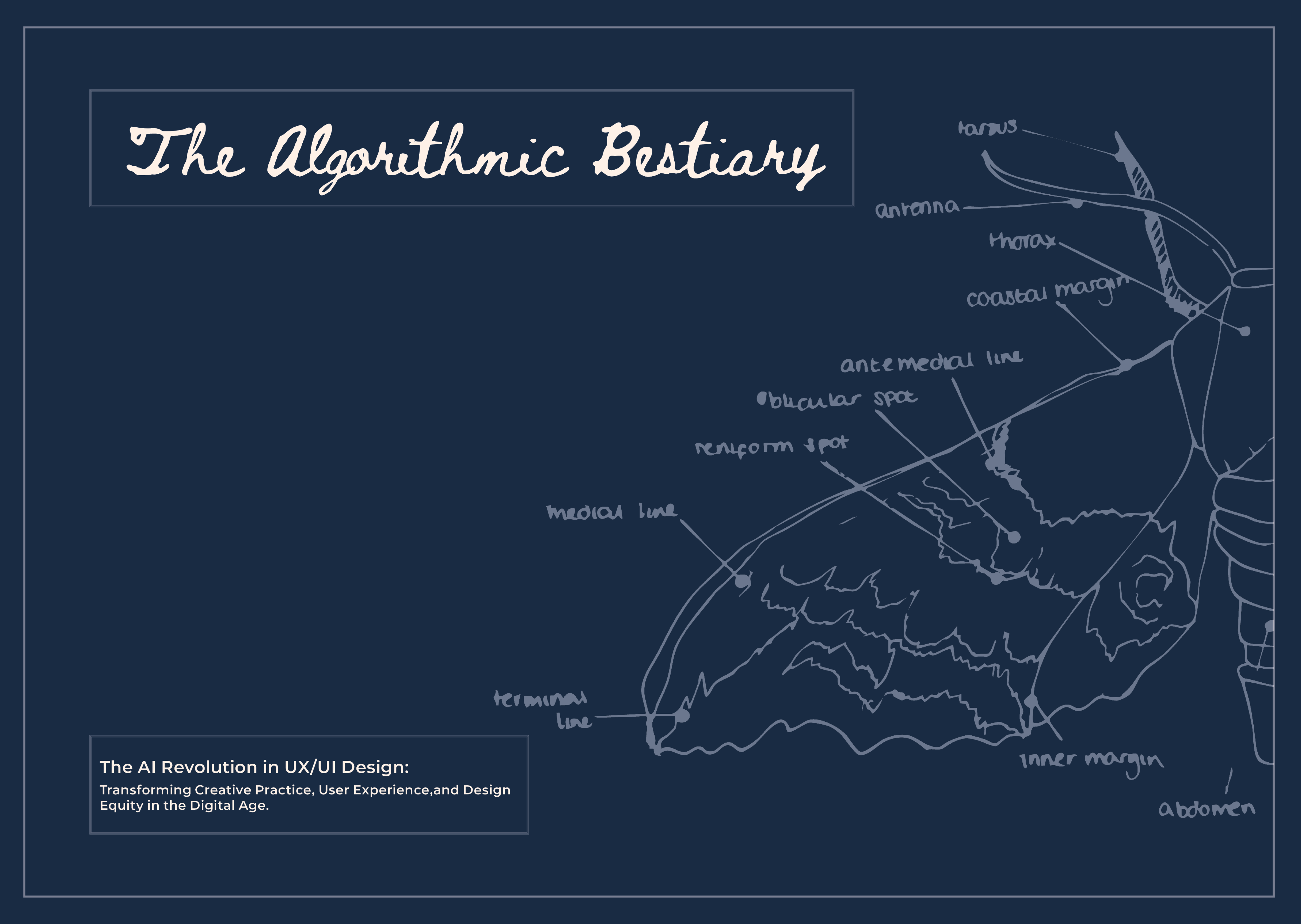
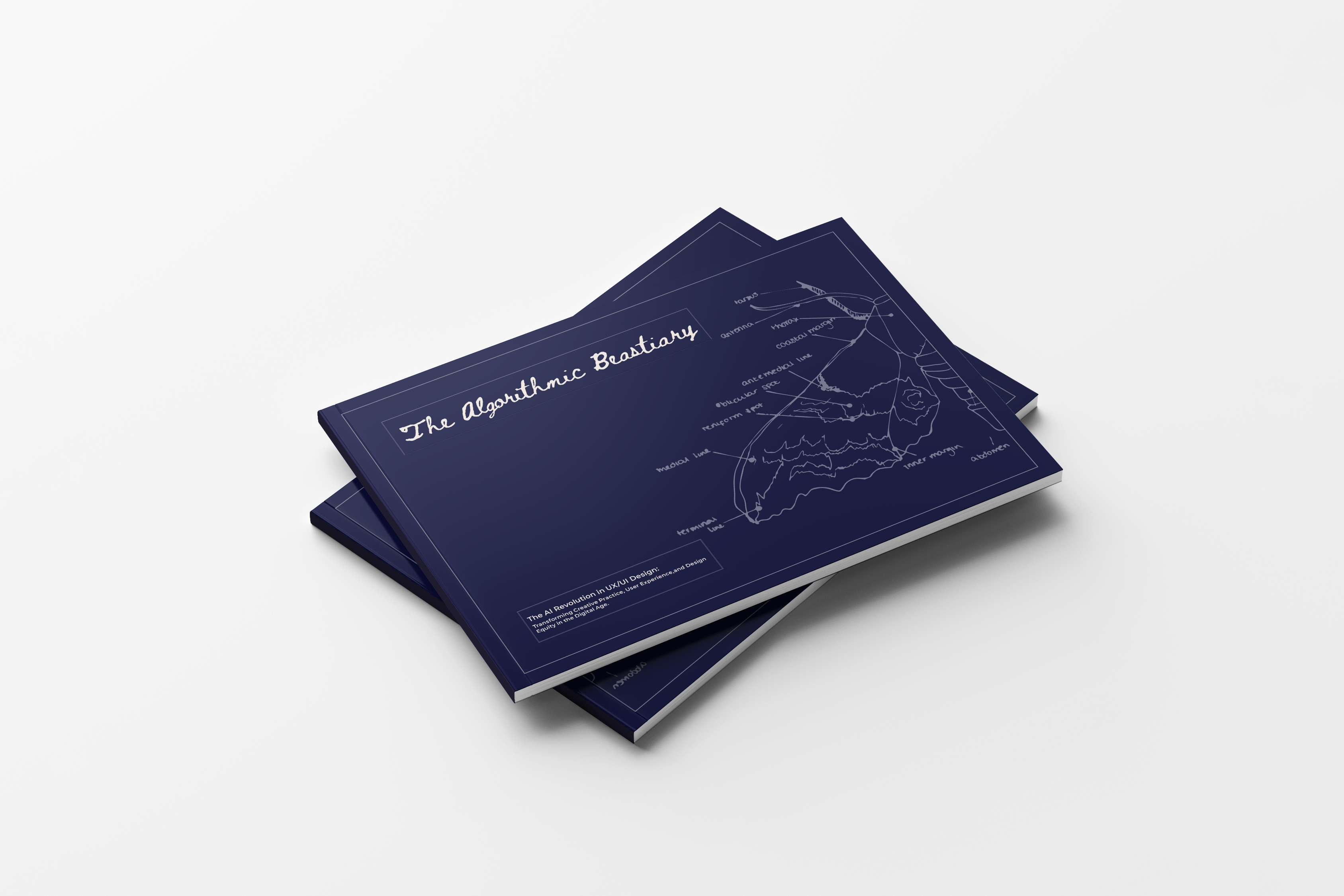
This conceptual shift influenced the design’s tone and format. I developed a landscape booklet that paired these hand-drawn illustrations with concise written reflections from the thesis, using a dark blue palette to create visual coherence and depth. The manual drawing and scanning process foregrounded craft and imperfection, reinforcing my argument that AI should augment rather than replace human creativity.
Final Project
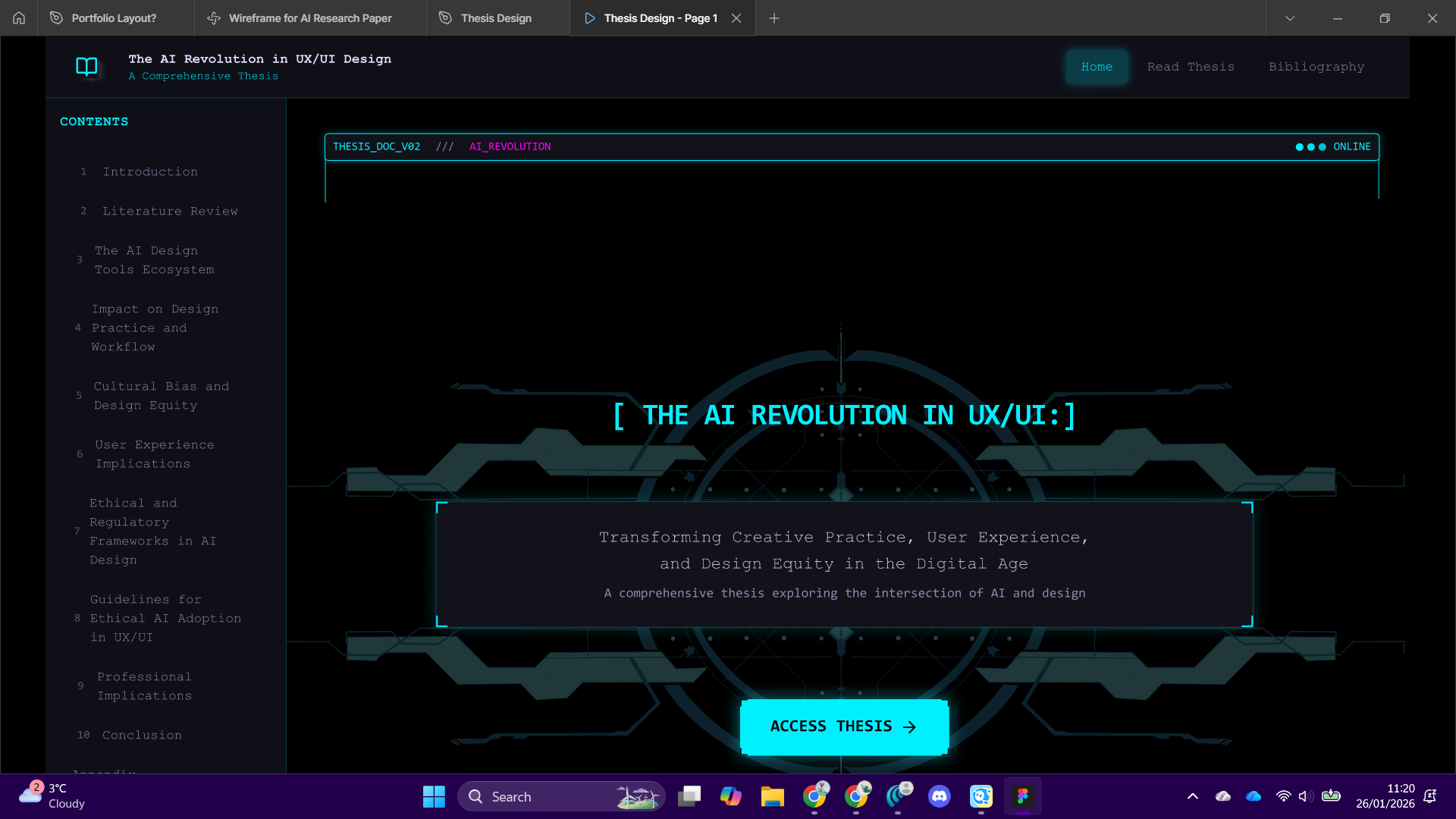
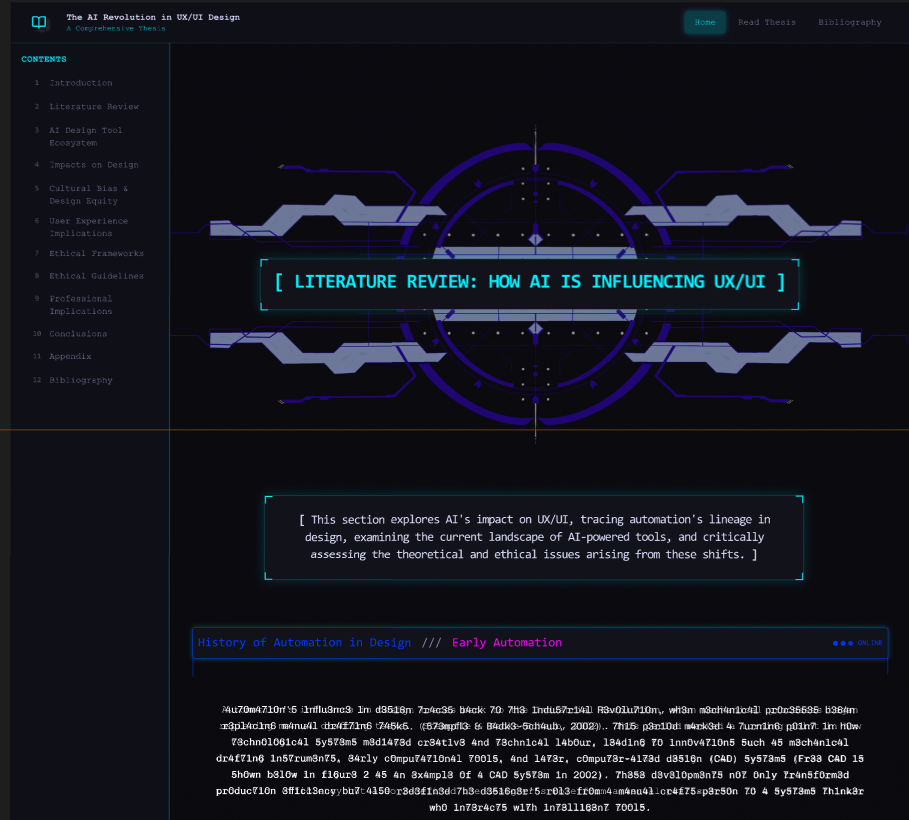
The accompanying interactive website acted as an experimental layer, presenting sections of text as ‘coded’ content revealed through user interaction. This embodied the duality of human–machine collaboration central to my thesis—where understanding emerges through active engagement.
Together, the written and visual components formed a cohesive exploration of how designers might critically and creatively engage with AI systems. The project allowed me to bridge research and practice, translating academic investigation into tangible design outcomes that challenge automation’s role in shaping contemporary creative work.
Analogue Process
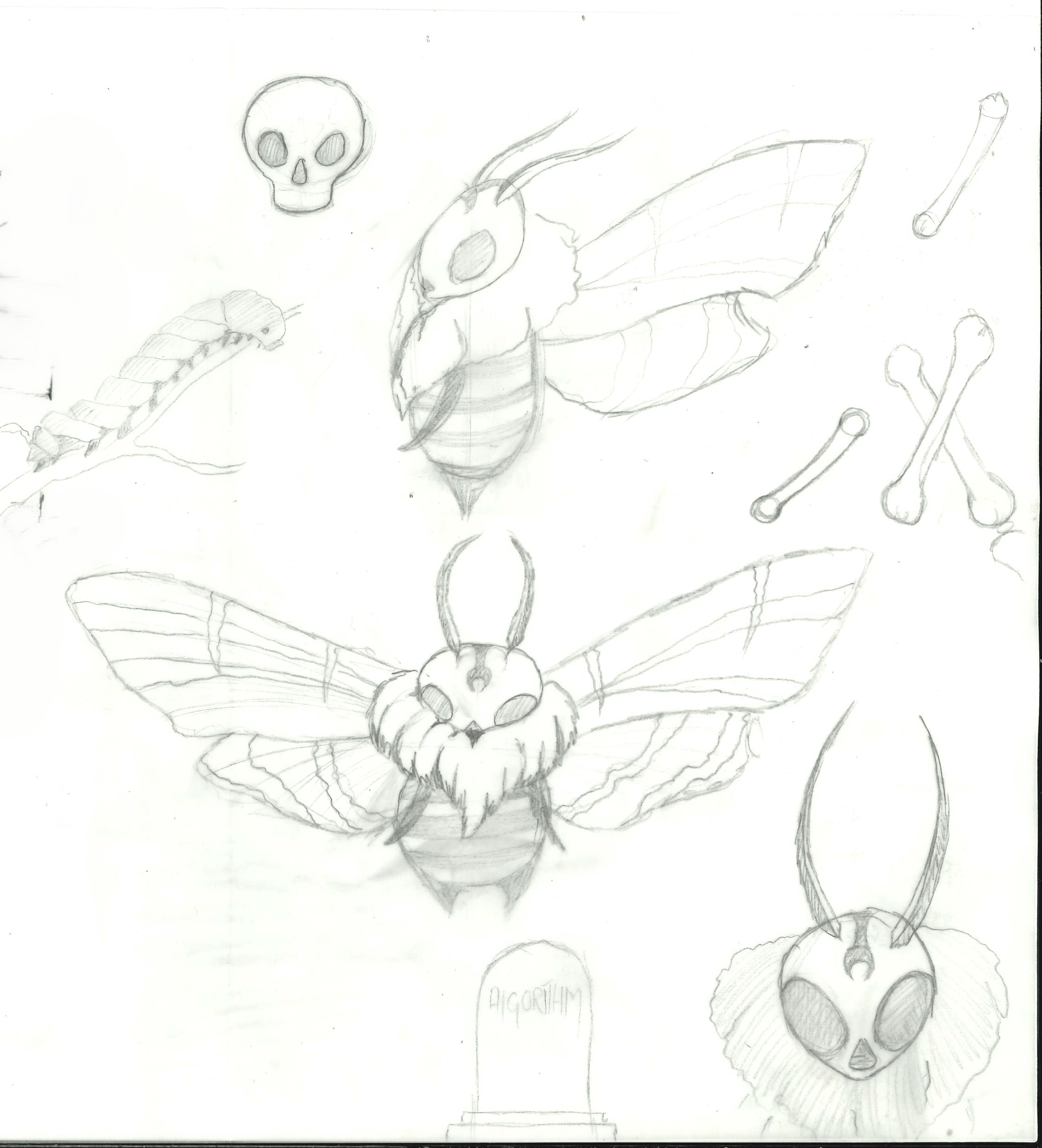
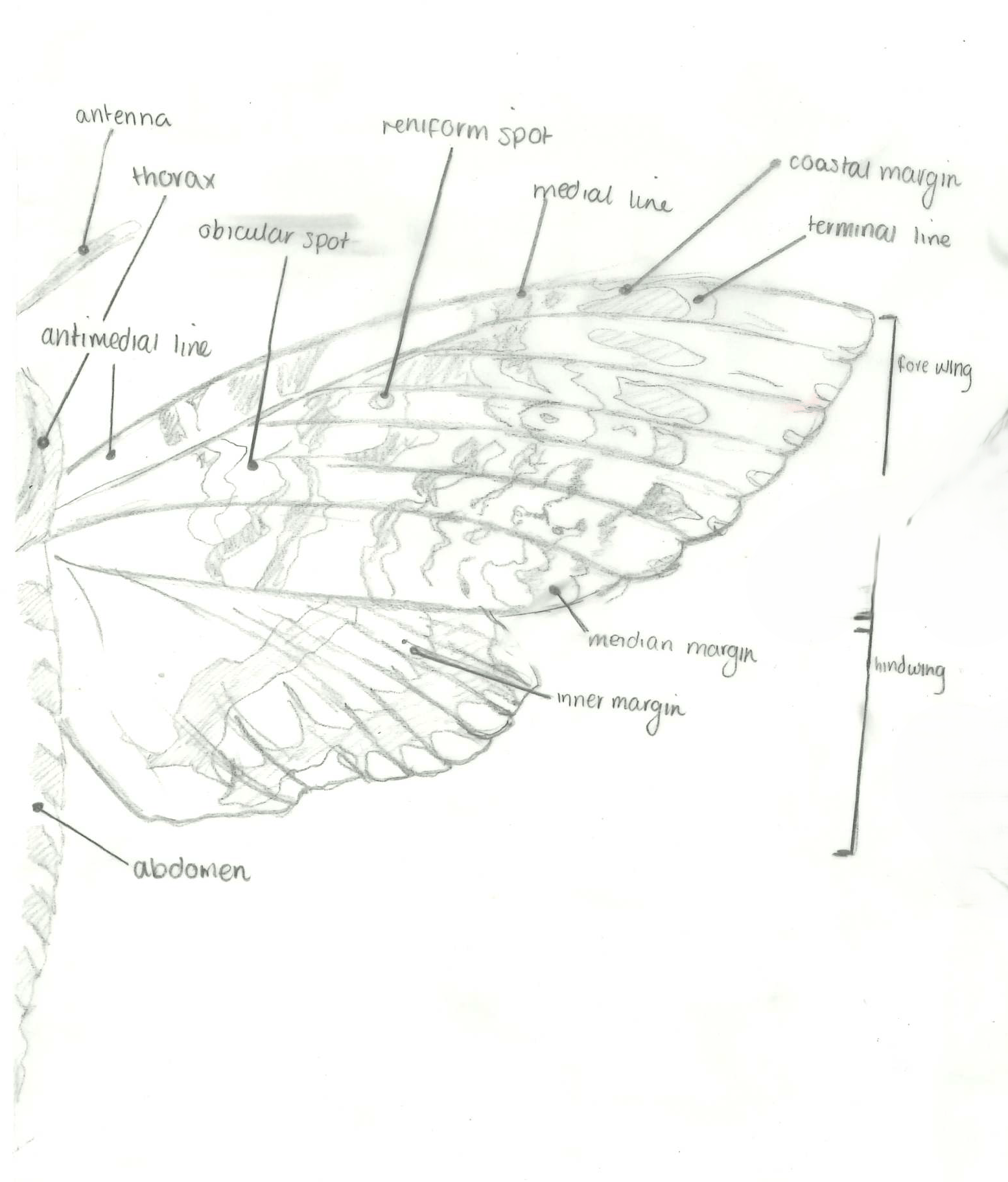
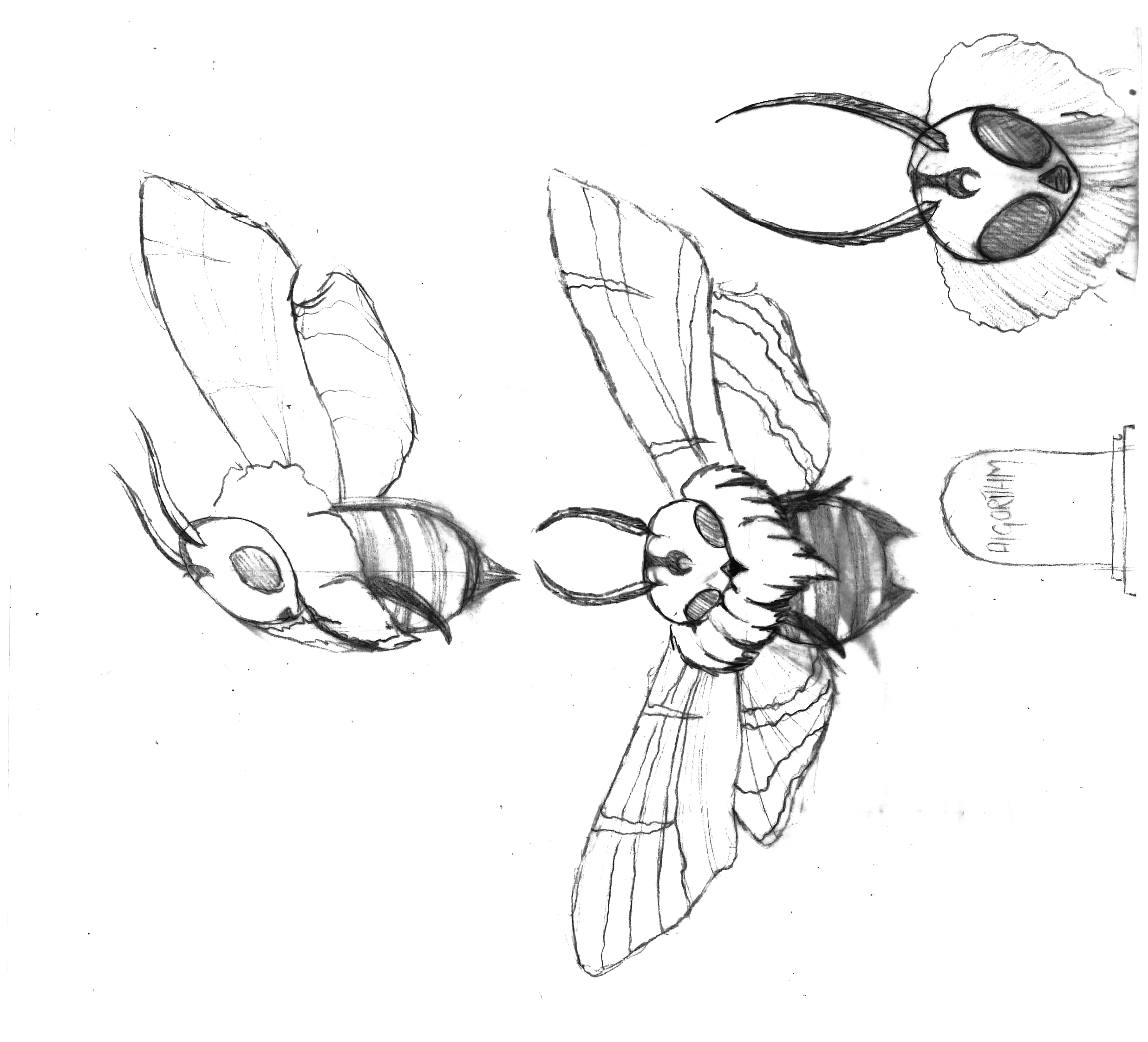
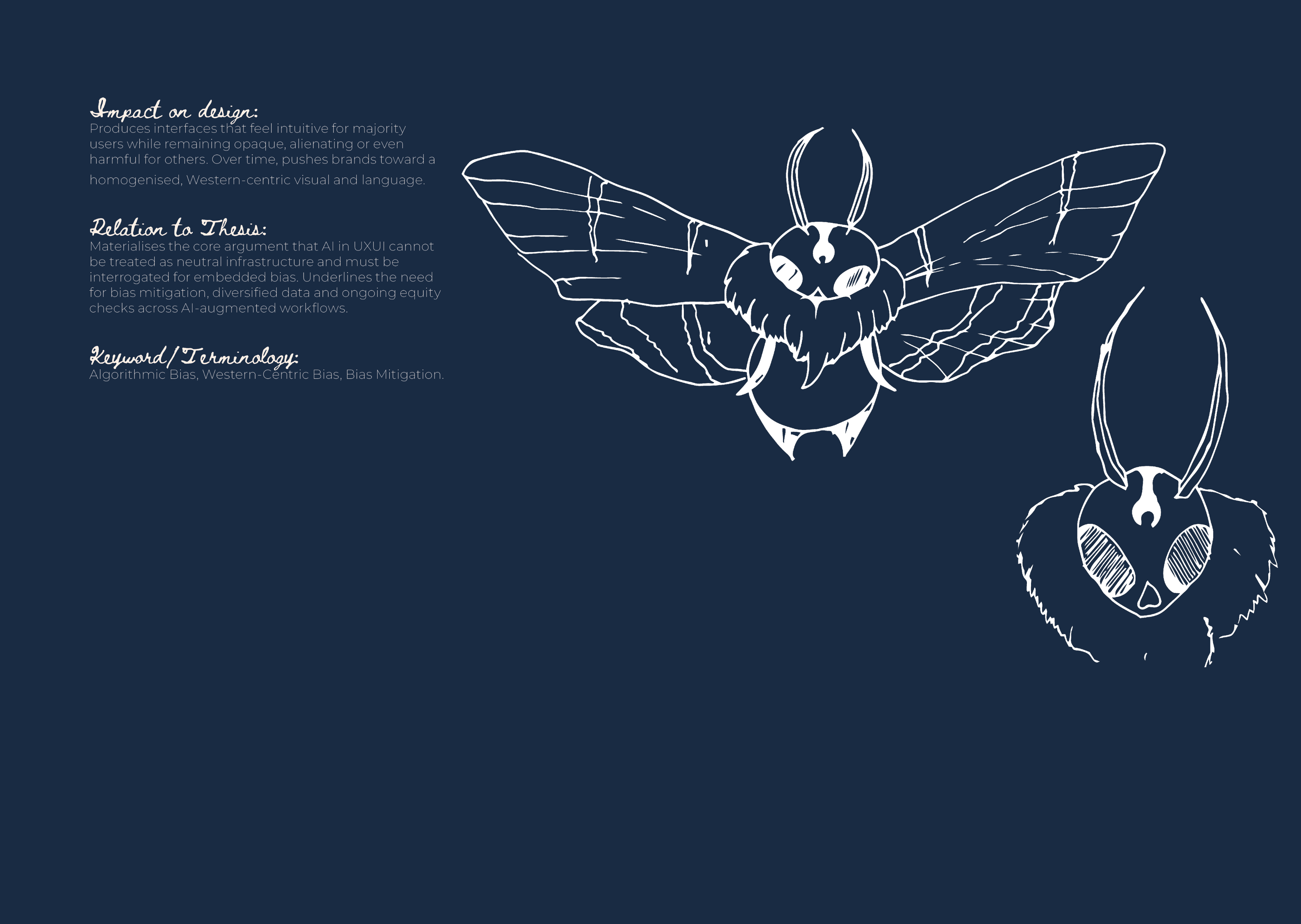
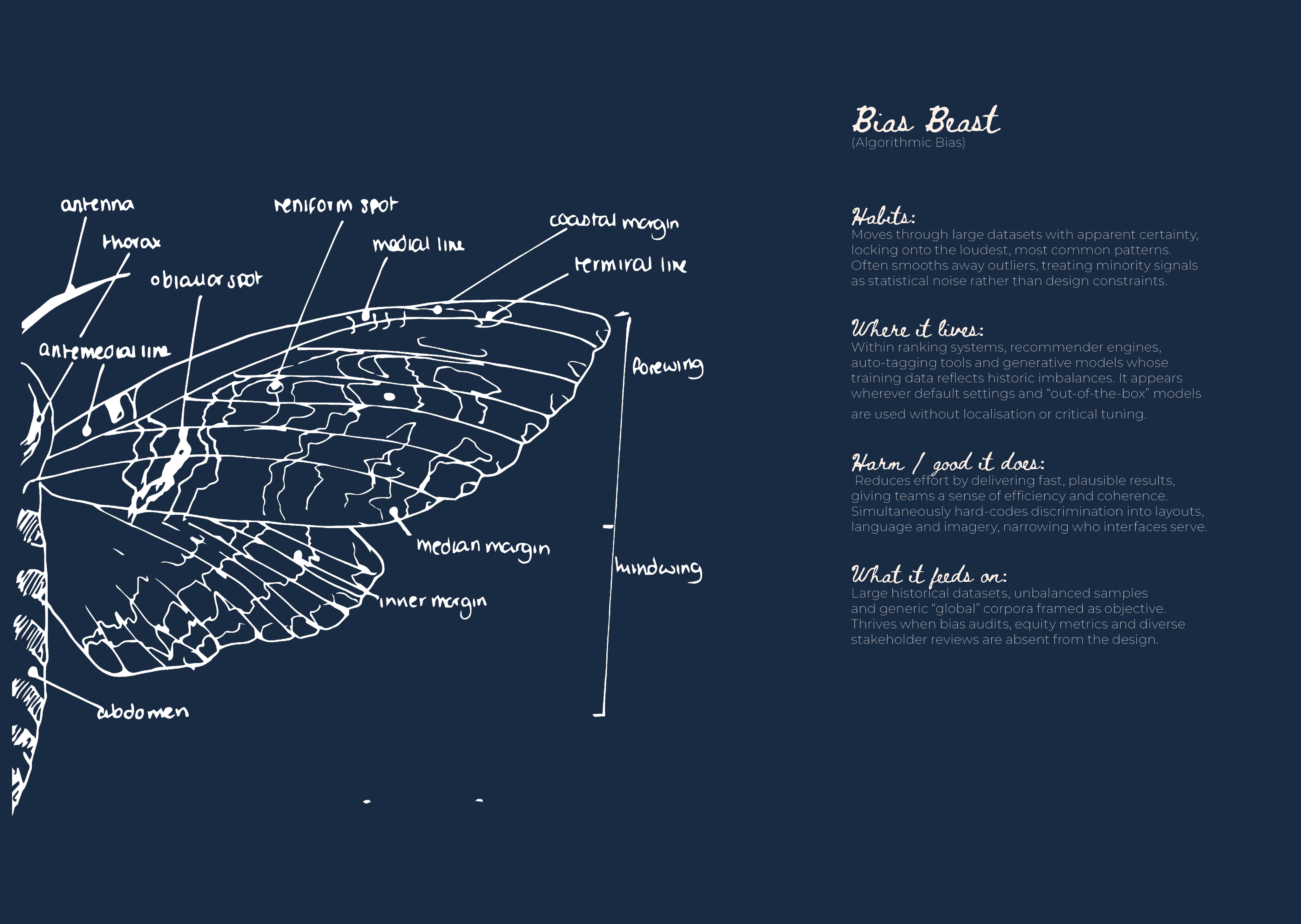
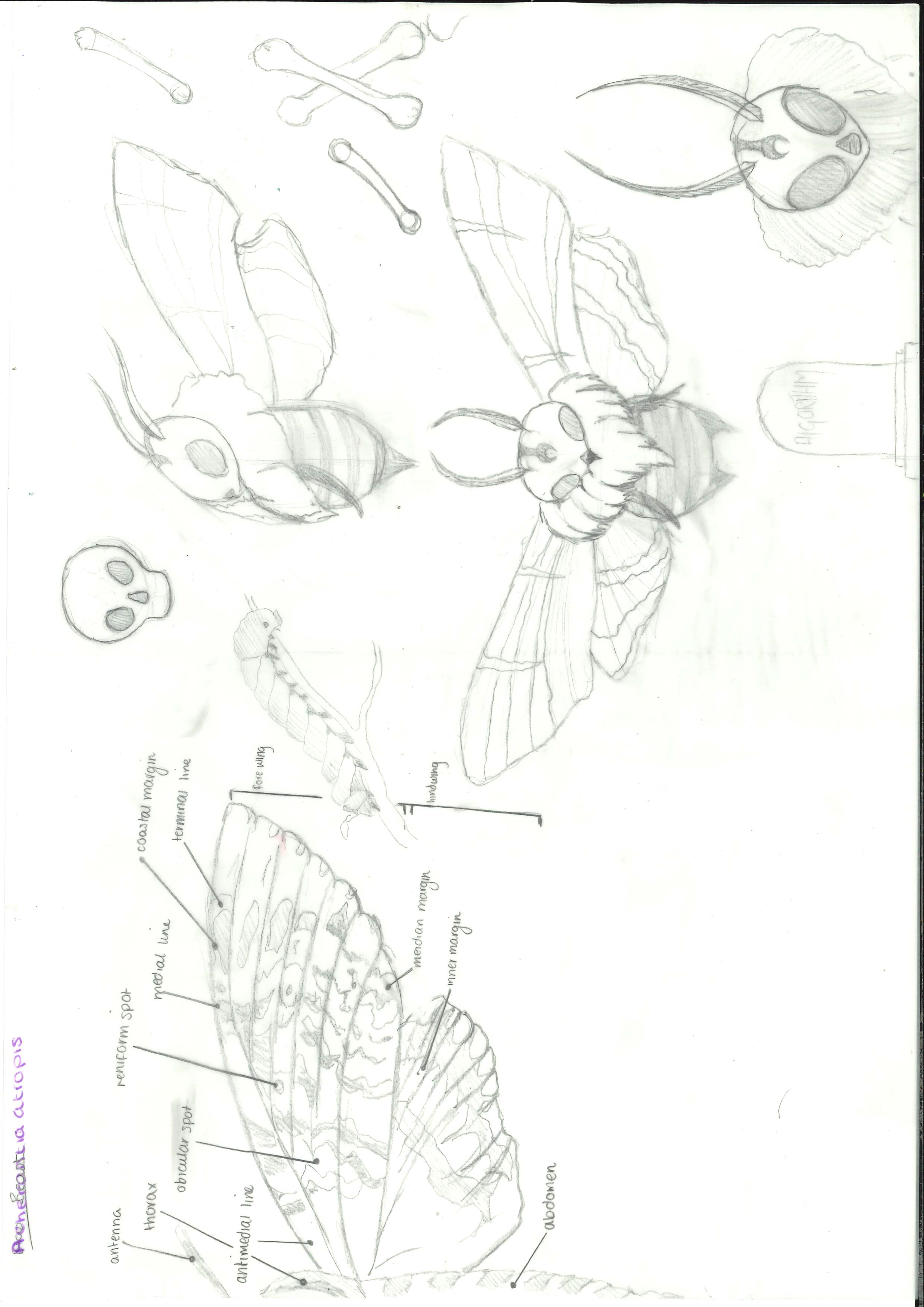
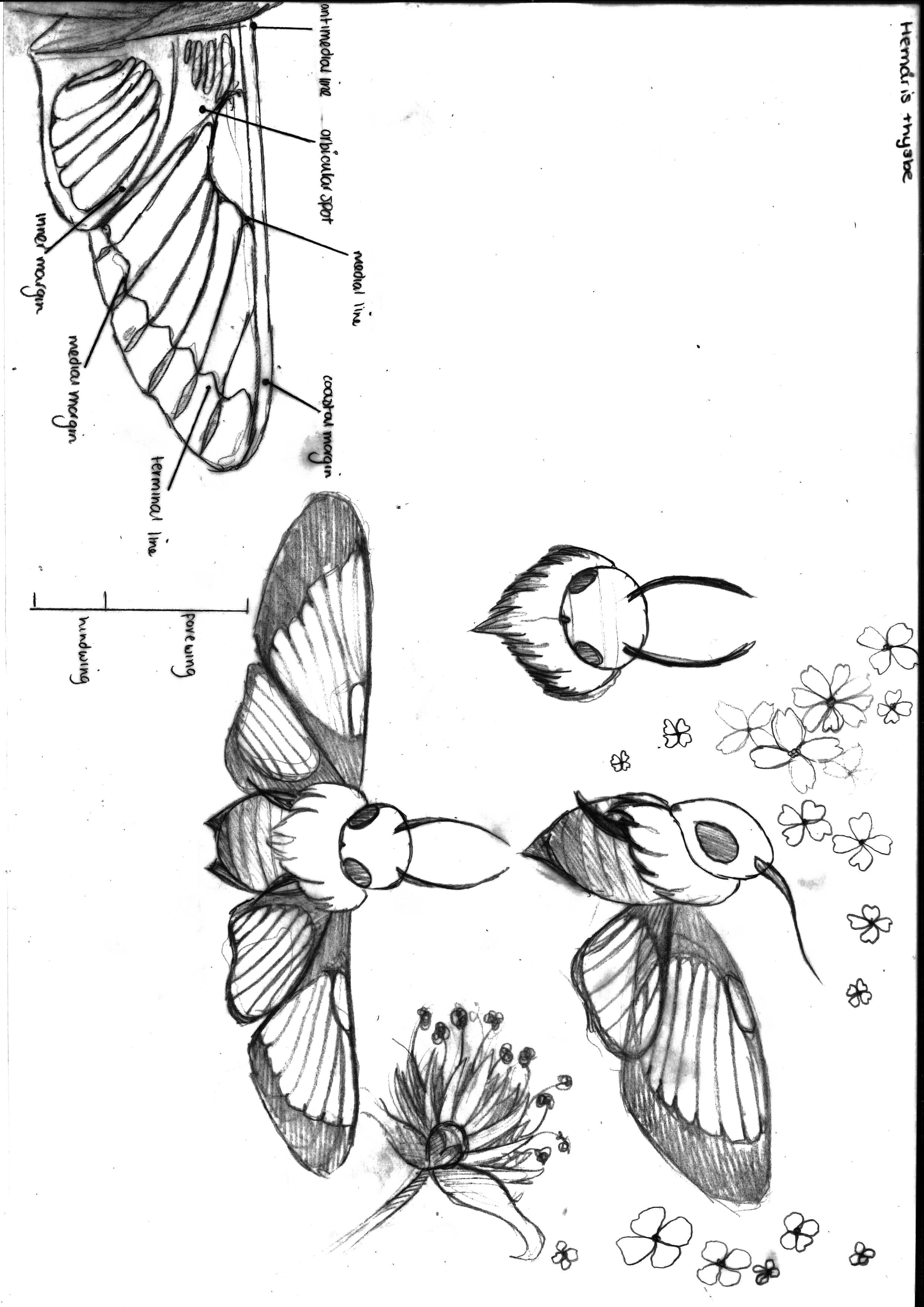
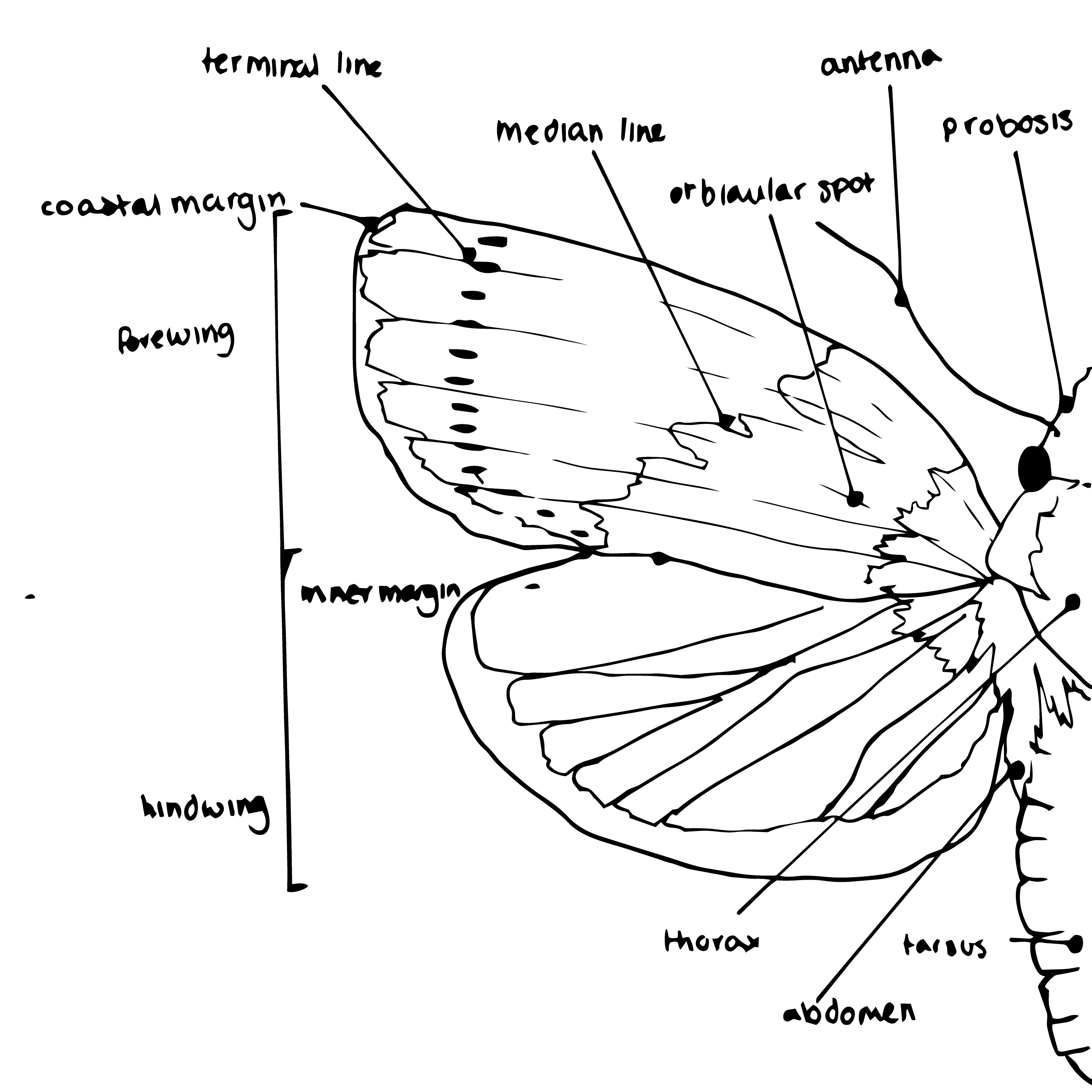
The hand-drawn moth sketches formed the visual foundation of the project, developed through a blueprint-inspired style to capture detail, structure, and form. Working in an analogue way allowed the drawings to feel more considered and tactile, while the repeated linework and technical quality gave the illustrations a sense of precision that supported the overall visual direction.
This approach also strengthens the rationale behind the project by creating a clear contrast with the theme of automation. The hand-rendered characters act as symbolic visual forms that communicate complex ideas such as bias, fairness, and human agency in a way that is both accessible and conceptually grounded, framing the thesis as a hybrid design practice that values human authorship alongside digital processes.
RESEARCH & EDITORIAL
Visual Thesis Design
My thesis, “The AI Revolution in UX/UI Design: Transforming Creative Practice, User Experience, and Design Equity in the Digital Age,” investigated how artificial intelligence is reshaping UX/UI design. It examined AI’s creative potential, professional and ethical implications, and the evolving relationship between automation, accessibility, and design authorship.
Overview
Initially, I intended to produce a working UX/UI prototype to demonstrate these ideas, but the research process revealed that many challenges—like cognitive bias, cultural representation, and trust—are best communicated metaphorically rather than functionally. This insight motivated a shift toward a visual bestiary: a symbolic framework translating complex concepts into memorable, character-based entities such as the Bias Beast, Fairness Gardener, and Red Button Human. Each figure personifies a tension between technological ambition and human values, turning abstract ethical debates into visual narratives.
This conceptual shift influenced the design’s tone and format. I developed a landscape booklet that paired these hand-drawn illustrations with concise written reflections from the thesis, using a dark blue palette to create visual coherence and depth. The manual drawing and scanning process foregrounded craft and imperfection, reinforcing my argument that AI should augment rather than replace human creativity.
Analogue Process
The hand-drawn moth sketches formed the visual foundation of the project, developed through a blueprint-inspired style to capture detail, structure, and form. Working in an analogue way allowed the drawings to feel more considered and tactile, while the repeated linework and technical quality gave the illustrations a sense of precision that supported the overall visual direction.
This approach also strengthens the rationale behind the project by creating a clear contrast with the theme of automation. The hand-rendered characters act as symbolic visual forms that communicate complex ideas such as bias, fairness, and human agency in a way that is both accessible and conceptually grounded, framing the thesis as a hybrid design practice that values human authorship alongside digital processes.
Editorial Outcome
The accompanying interactive website acted as an experimental layer, presenting sections of text as ‘coded’ content revealed through user interaction. This embodied the duality of human–machine collaboration central to my thesis—where understanding emerges through active engagement.
Together, the written and visual components formed a cohesive exploration of how designers might critically and creatively engage with AI systems. The project allowed me to bridge research and practice, translating academic investigation into tangible design outcomes that challenge automation’s role in shaping contemporary creative work.